
Any shed, any size, anywhere · Servicing all of Australia
0456 869 600 · QBCC 15515419
WHAT WE BUILD
Nine shed types, all engineered to your site. Tell us what you need it for and we’ll work out the rest.
Every shed on this page is engineered for the site it’s going on. Wind rating, soil classification, span, height and what you’re putting inside it all change the structure, which is why we don’t sell out of a catalogue.
If you already know what you want, jump straight to it below. If you don’t, that’s normal, and it’s what the first phone call is for.

For big blocks. Machinery, vehicles, feed and the gear that accumulates.

Working properties. Hay, headers, workshops and stock shelter.

Built around the aircraft. Clear span, door opening and certification.

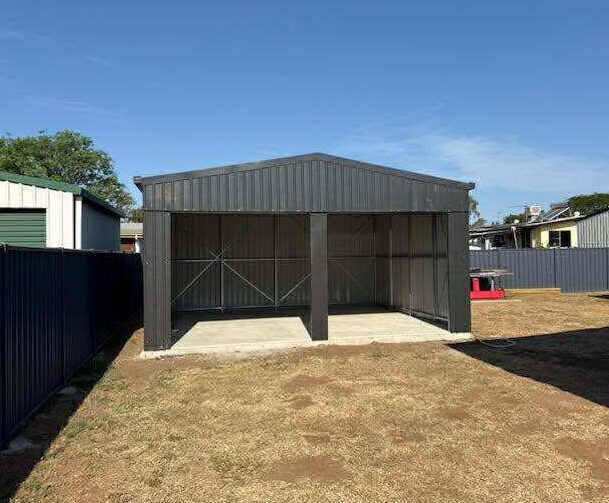
Extra covered area off a building you already have.

Cars, utes, caravans and boats. Freestanding or attached.

Lock-up storage that matches the house it sits beside.

Single slope roof. Narrow sites and lean-to structures.

Commercial and industrial. Bigger spans, heavier frames.

When the standard sizes don't suit your block or your gear.
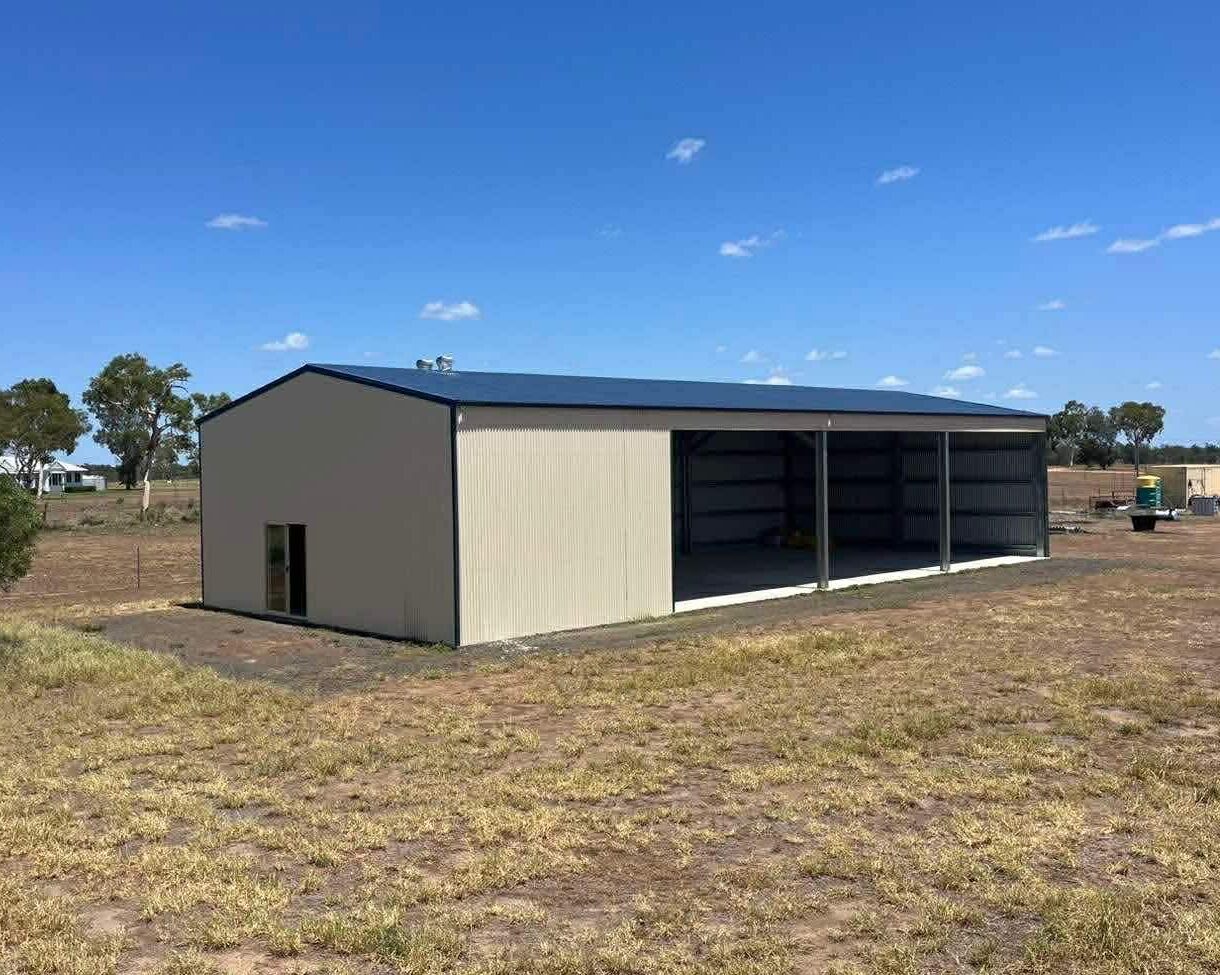
Storage that keeps up with a big block. Machinery, vehicles, feed, tools and the things that accumulate when you’ve got room for them.
The mistake most people make is sizing for what they own today. Acreage sheds fill up faster than anyone expects, and adding a bay later costs more than building it now. Worth thinking about what’s going in there in five years, not five months.
Sheds over 100m2 across a property will usually need a development permit, so it’s worth knowing where you sit before you settle on a size.
Typical uses: machinery storage, workshop space, vehicle and boat storage, general acreage storage
Covered space added to a shed or building you already have. Usually the cheapest way to gain useful area per square metre, because you’re only paying for one new roof and no new walls.
The catch is that the existing structure has to carry the extra load. We check the frame and the footings before quoting, because bolting an awning onto something that wasn’t designed for it is how you lose both.
Good for machinery bays, covered work areas, feed storage and getting gear out of the sun without a full build.
Typical uses: machinery bays, covered work areas, extra vehicle cover, feed and stock storage
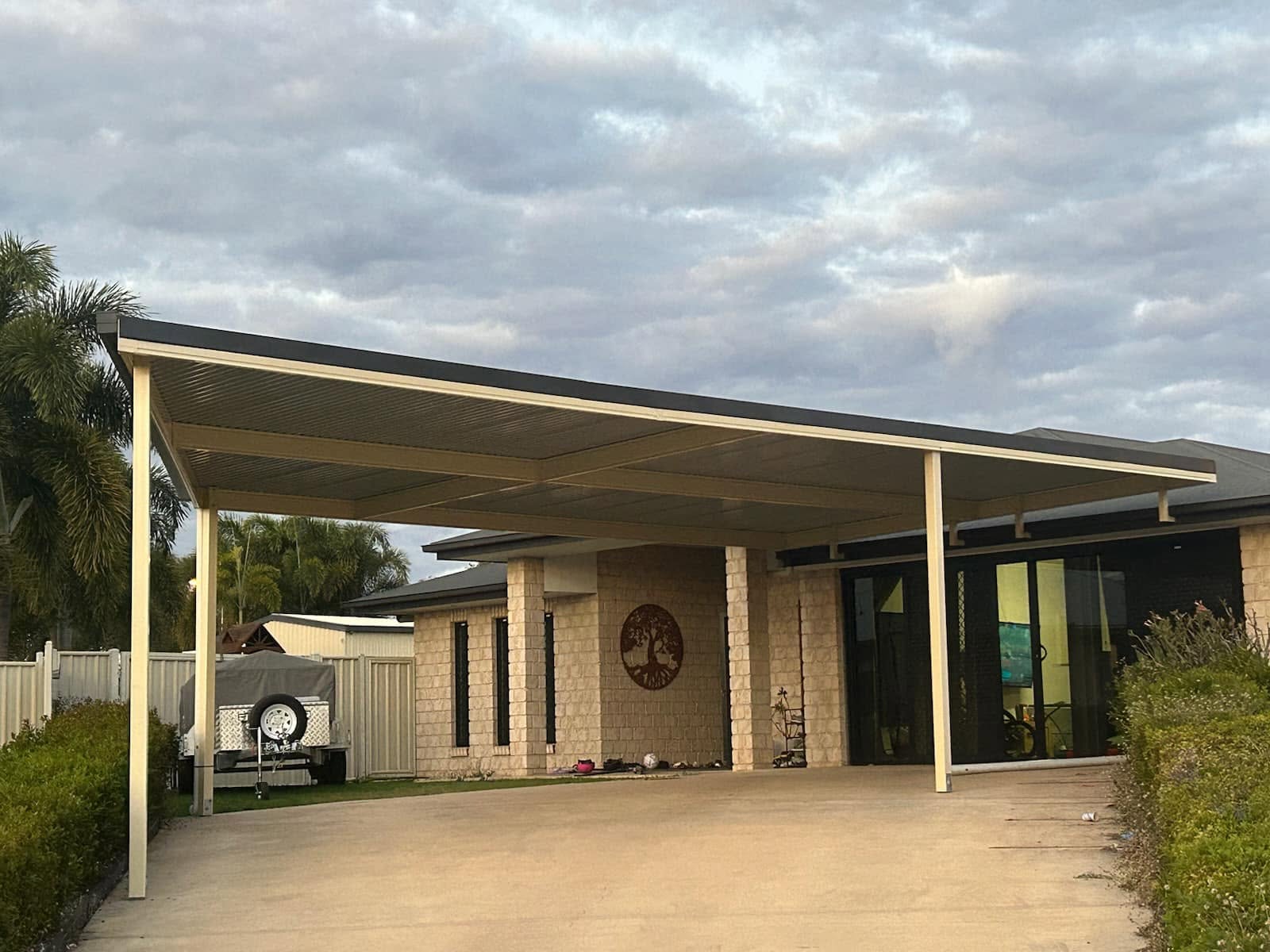
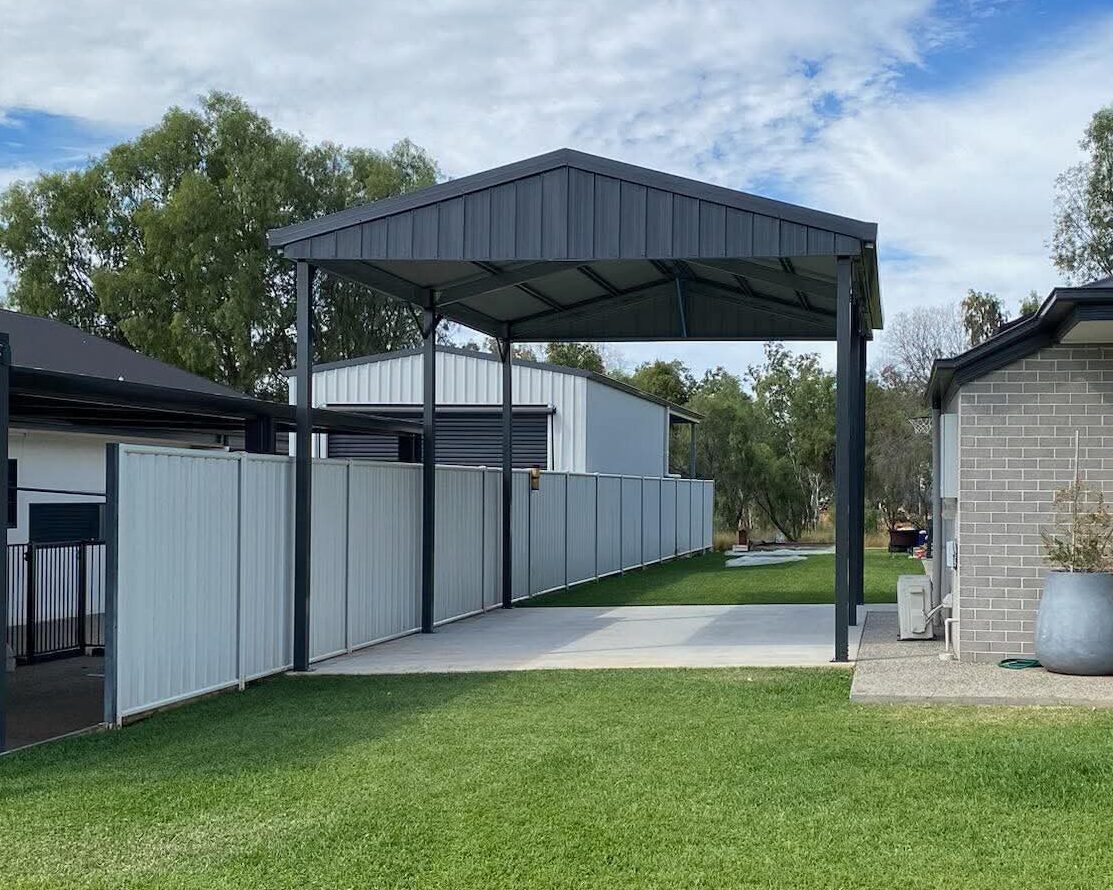
Cover for cars, utes, caravans, boats and campers. Freestanding on its own slab, or attached to the house or an existing shed.
Open structures are more exposed to wind uplift than a closed shed, not less, which surprises people. The engineering matters as much here as anywhere, and it’s the reason a carport that looks simple still needs proper footings.
Single, double or a full row for a commercial site. We build all of them.
Typical uses: vehicle cover, caravan and boat storage, workplace parking, attached to an existing building
Most of what we do ends up here in some form. Non-standard spans, awkward site shapes, extra height for machinery, specific door and opening layouts, a shed that has to sit around an existing structure.
You don’t need plans to start. A rough sketch on paper, a photo of something you’ve seen, or a description of what has to fit inside is enough for us to work from.
Custom doesn’t mean complicated. It usually just means the standard sizes don’t suit your block or your gear.
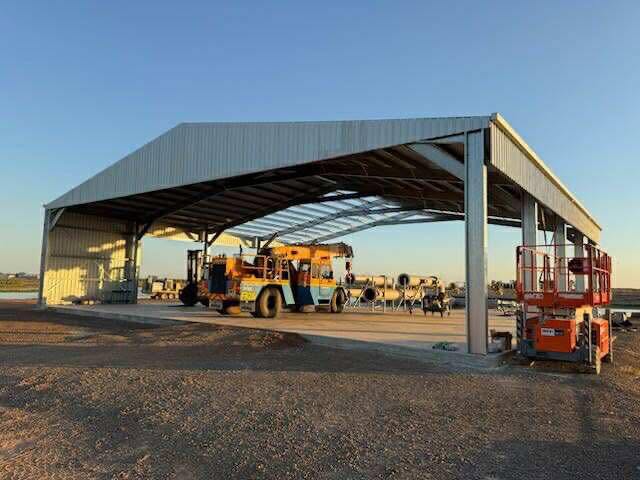
Typical uses: non-standard dimensions, difficult sites, specific equipment clearances, combined use buildings
Hay storage, machinery sheds, workshops and stock shelters for working properties across central Queensland.
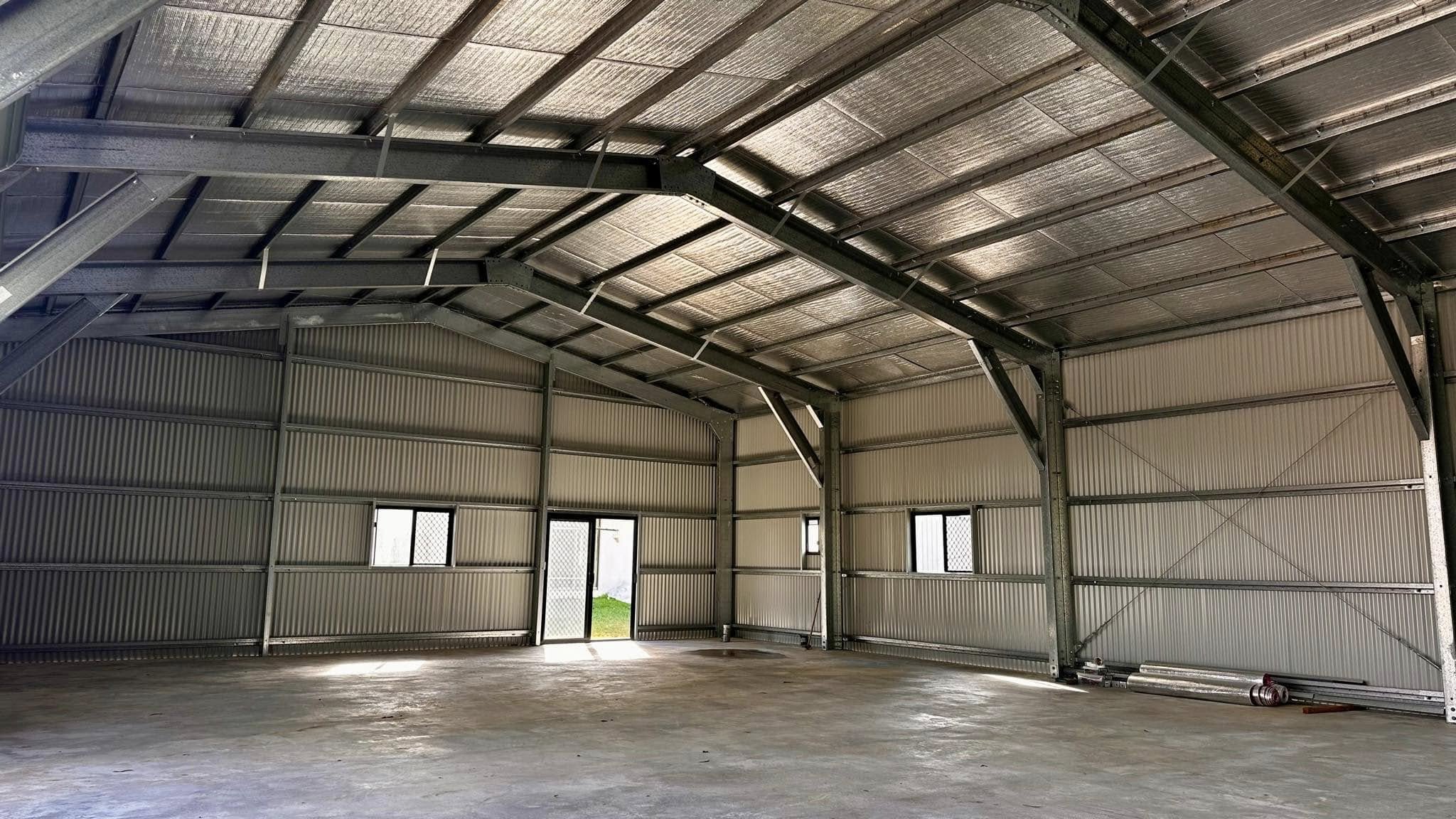
Clear span is what matters most on a farm shed. Every internal post is somewhere a header can’t turn, so the frame has to carry the roof without them. Height is the other one people underrate, because the machine you’re buying next is usually taller than the one you’ve got.
Open front, partly enclosed or fully closed, depending on what’s going in and what the weather does to it.
Typical uses: hay and fodder storage, machinery and header sheds, farm workshops, stock shelter
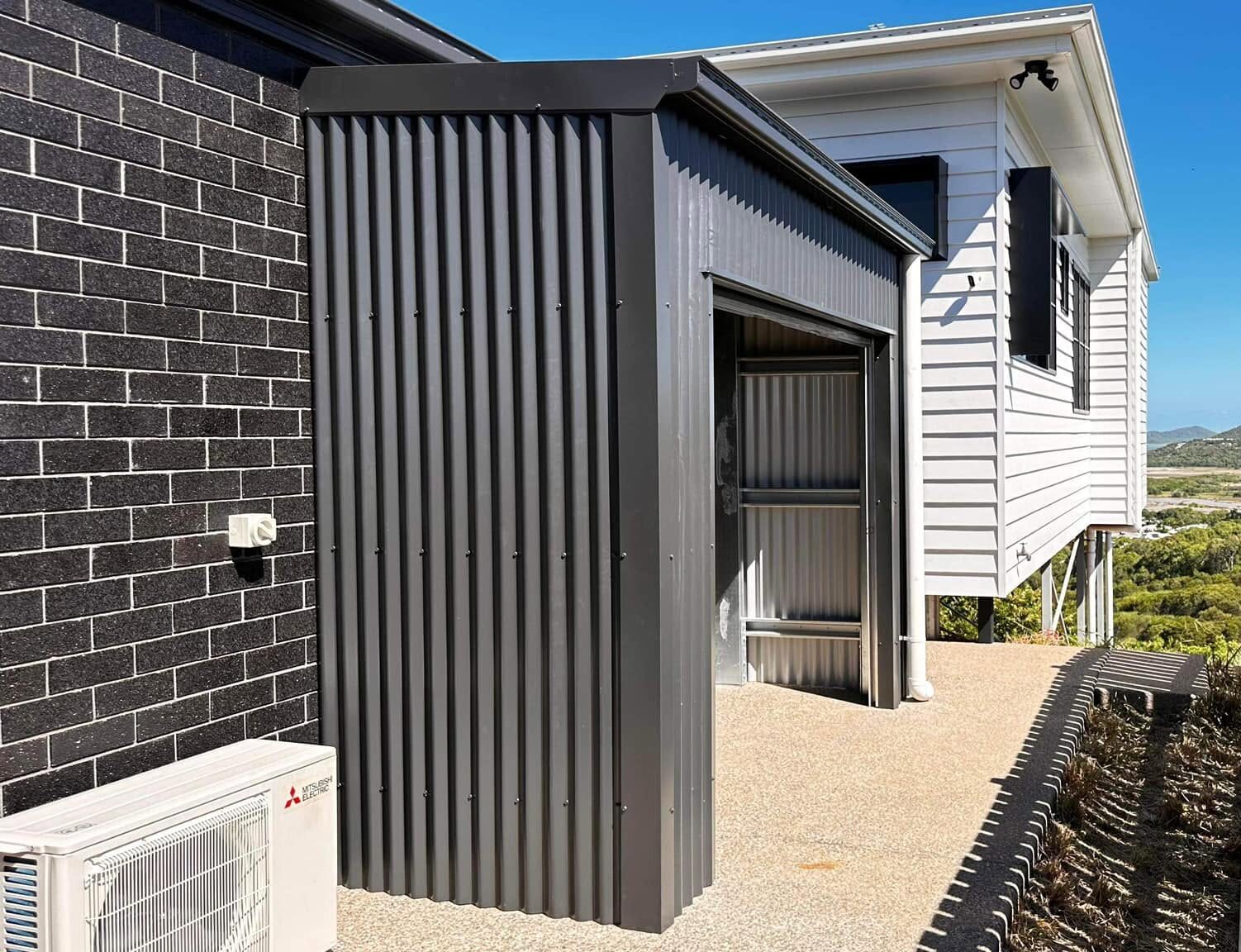
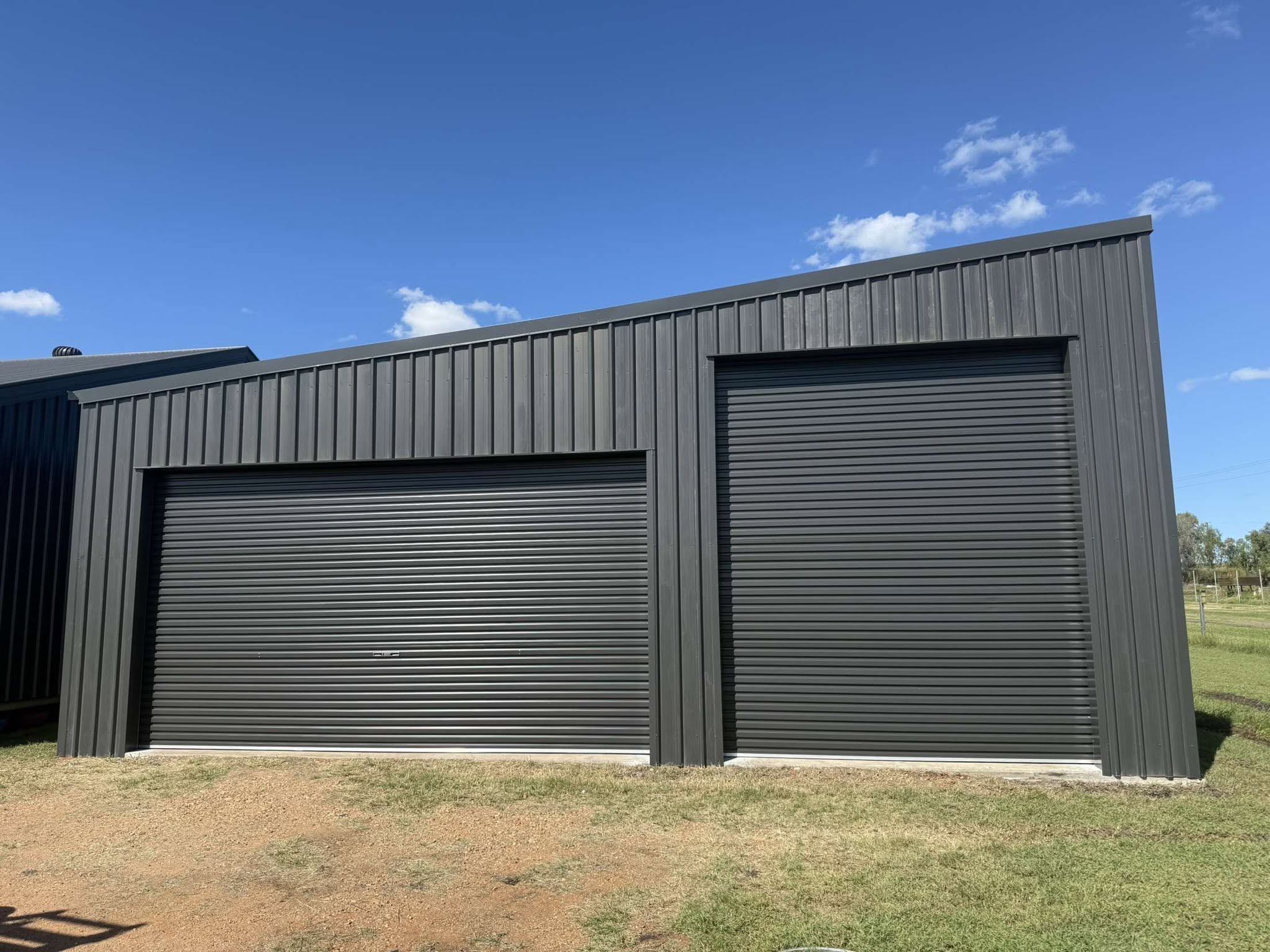
Lock-up garages that suit the house they’re sitting next to. Single, double or larger, with roller doors, a personal access door and a slab rated for what’s going on it.
Residential builds bring their own rules. Setbacks, height limits and boundary distances are all set by the Queensland Development Code and your local council, and they’re worth checking before you settle on a position in the yard.
Cladding and colour can be matched to the house so it doesn’t look like an afterthought.
Typical uses: vehicle storage, home workshops, secure storage, additions alongside an existing house
Aircraft hangars built around the clearances the aircraft actually needs. Clear span across the width, height at the door opening, and a door system that opens the full face rather than most of it.
Wing span and tail height set the geometry, so those are the first two numbers we ask for. Everything else follows from them.
Airstrip location, prevailing wind direction and how the aircraft is moved in and out all affect the design, so it’s worth walking the site before anything is drawn.
Typical uses: private and agricultural aircraft, ag spraying operations, combined hangar and workshop
A single sloping roof rather than a gable. Clean lines, straightforward drainage to one side, and usually less steel for the same floor area.
Skillions suit narrow blocks, sites where a gable would sit awkwardly against a house, and anywhere you want the water going in one specific direction. They also work well as lean-tos against an existing wall.
Same engineering as anything else, just a different roof form.
Typical uses: narrow sites, lean-to structures, modern residential builds, cost effective cover
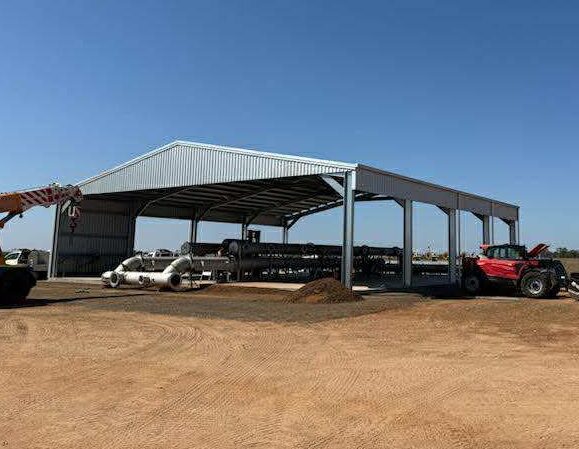
Heavier commercial and industrial buildings. Larger spans, heavier portal frames, higher clearances and structures designed around a specific operation rather than general storage.
These builds usually come with more moving parts. Engineering, approvals, services and site works all have to line up, and the timeline reflects that. We’d rather tell you that at the start than halfway through.
Workshops, depots, industrial storage and buildings that have to house specific plant or vehicles.
Typical uses: commercial workshops, industrial storage, depots and transport yards, purpose-built operations
Most people ring us knowing what they want to store, not what the shed is called. That’s fine. Tell us what’s going in it, how much room you’ve got and what the site’s like, and we’ll tell you what fits.
There’s no cost to the conversation and no obligation at the end of it.
Send through your site details and what you’re planning, and we’ll come back with a straight answer and a clear price.
© 2026 LTC Shed Constructions PTY LTD
QBCC 15515419 · ACN 673 779 514
Designed by Simply Remarkable